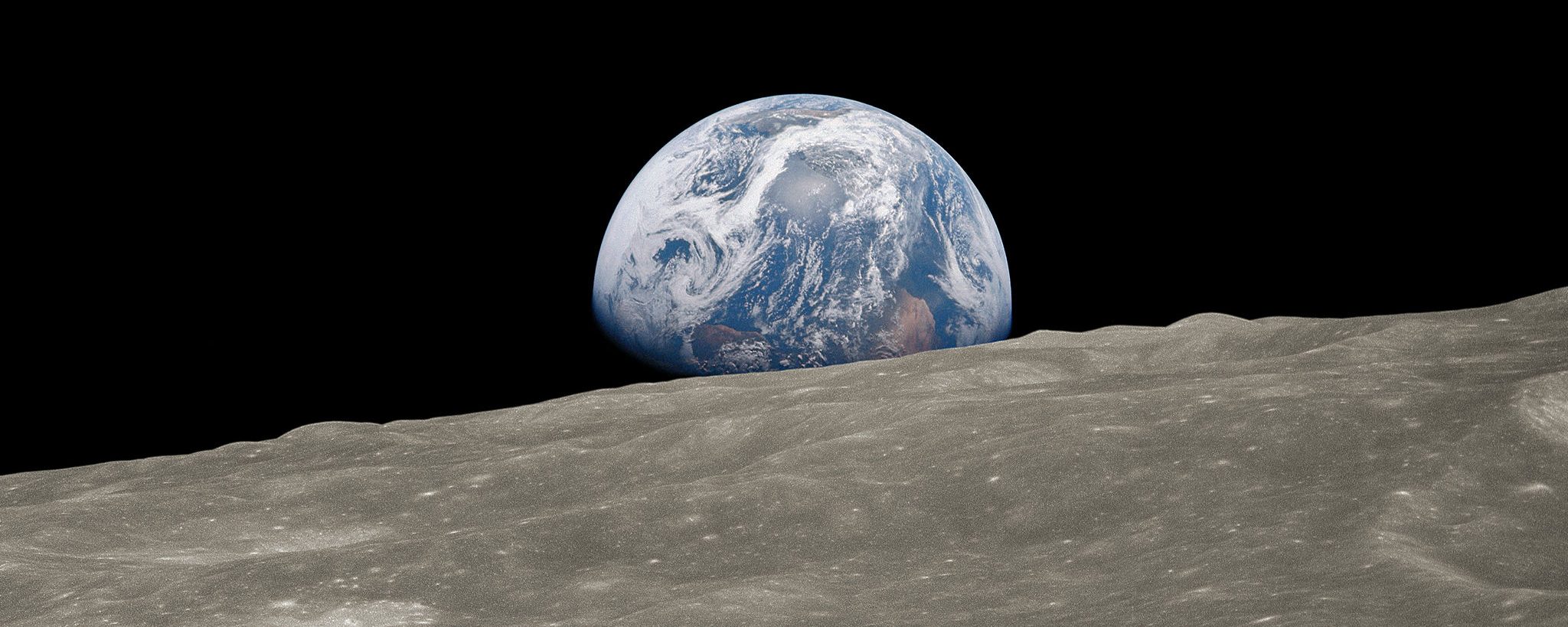
Today, fifty years ago, on the Sunday of 20 July 1969, at 20:17 UTC, aeronautical engineer, test pilot, and astronaut Neil Armstrong reported to the Mission Control’s CAPCOM(beginfootnote)capsule communicator(endfootnote) Charles Duke, and transmitted already historic words.
NEIL: ‘Houston, Tranquility Base here. The Eagle has landed.’
CAPCOM: ‘Roger, Twan— Tranquility, we copy you on the ground. You got a bunch of guys about to turn blue. We’re breathing again. Thanks a lot.’
Of course, ‘Twan'(beginfootnote)’Twan’ is (at least) a Dutch version of the French name ‘Toine’, usually given to males.(endfootnote) was a mistake but who cared because humanity had just achieved the greatest accomplishment thinkable.
This was and continued to be the stuff that dreams were made of. Many decisions to become a scientist and engineer were due to the hardly over-estimable inspiration the landing on the Moon brought to many of us and the next generations. We can only hope that a sufficient percentage of humanity will be allowed by society to continue to perform scientific research and explorations(beginfootnote)And that scientific data won’t be confused with opinions and/or regarded as part of the larger scheme of deception from a hidden agenda of those who really control the world. ??(endfootnote).
Here is a clip of the landing, courtesy of NASA: ‘It’s a 16mm film clip showing the final forty seconds of descent. It begins when Charlie Duke calls out sixty seconds of fuel remaining, and with the Little West Crater at the bottom of the window. The time-lapse video runs faster than real-time. Audio runs at normal, real-time speed, however.’
If you have time (three hours and two minutes), by all means, watch NASA’s restored Apollo 11 Moonwalk.
Science
While it was indeed an unprecedented achievement of courage, skill, and applied maths and science, the astronauts also carried out several scientific experiments, yielding some very interesting data on our solar system. Dr. Becky Smethurst, astrophysicist and research fellow at the University of Oxford, highlights the following five things we didn’t know before we went to the Moon, in a video on their YouTube channel:
- the distance to the Moon,
- the structure inside the Moon,
- what the solar wind is made of,
- what the Moon is made of,
- how the Moon was formed.
We highly recommend subscribing to their channel with ever informative and entertaining nuggets of knowledge you both knew and didn’t know you wanted to know about that little agitation called Universe. Happy lunar anniversary! To everyone.

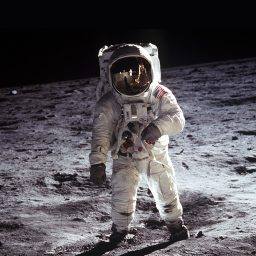
Featured image: Buzz Aldrin, made by Neil Armstrong. Courtesy of NASA.